Fighting Screen Addiction Infographic: A Strategic Asset for Digital Wellness Communication
In an era where attention is the most contested currency, communicating the value of digital wellness requires more than statistics; it demands a narrative structure that resonates emotionally and logically. The Fighting Screen Addiction Infographic serves as this critical bridge between abstract health data and actionable behavioral change. For professionals, educators, and content creators, this asset is not merely a decorative element but a strategic communication tool designed to visualize complex recovery processes. By leveraging a structured vector infographic template, organizations can transform dry warnings about screen time into compelling, step-by-step guides that foster genuine engagement and understanding.
The strategic utility of this resource lies in its ability to simplify cognitive load. When addressing topics like digital detox or productivity recovery, audiences are often already fatigued by information overload. A well-designed process timeline chart reduces friction by presenting solutions linearly. Instead of overwhelming stakeholders with dense text, the Fighting Screen Addiction Infographic utilizes visual hierarchy to guide the viewer through a logical progression. This approach aligns with modern learning preferences, where visual data processing is significantly faster than textual analysis, making it an essential component for effective health campaigns, corporate wellness programs, and educational curricula.
Aligning Visual Design with Behavioral Change Goals
Before deploying any design asset, it is imperative to establish clear objectives. The Fighting Screen Addiction Infographic is most effective when treated as a solution-oriented framework rather than a generic placeholder. Professionals must first determine whether their goal is awareness, education, or conversion. If the objective is to drive sign-ups for a digital wellness workshop, the infographic should emphasize the "after" state of the five-step process. Conversely, if the goal is internal policy adoption within a company, the focus should shift toward the operational benefits of reduced screen fatigue, such as improved decision-making and error reduction.
Strategic planning also involves audience segmentation. Entrepreneurs and freelancers respond to messaging centered on ROI and deep work, while parents and educators prioritize developmental health and family connection. The versatility of the vector format allows for rapid adaptation to these distinct personas without compromising design integrity. By customizing the linear icons and color palettes to match specific brand identities or campaign themes, communicators ensure the message feels native to the platform. This intentionality prevents the content from appearing as stock filler and instead positions it as bespoke thought leadership.
Leveraging the Five-Step Process Timeline for Clarity
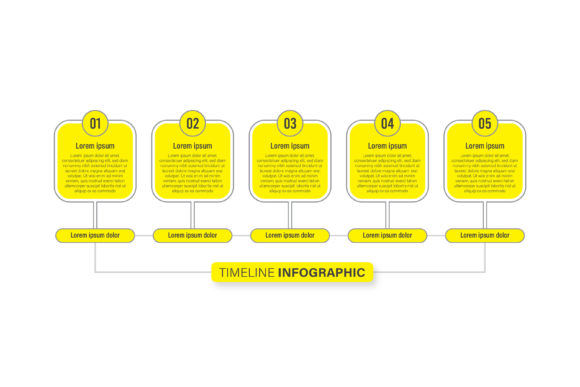
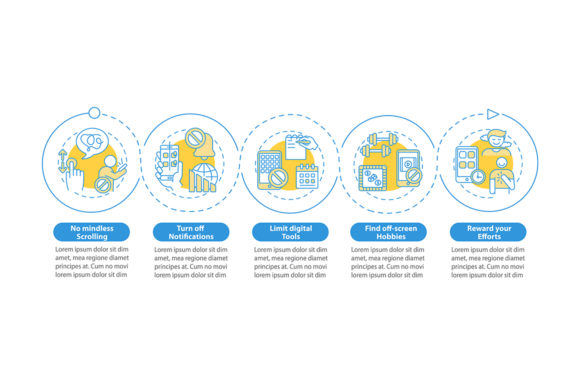
The core strength of this template is its data visualization architecture, specifically the five-step workflow layout. Human cognition favors chunked information, and breaking down the journey of fighting screen addiction into discrete phases makes the challenge feel manageable. When utilizing this feature, practitioners should map each step to a tangible action rather than a vague concept. For example, rather than labeling a step "Reduce Usage," a more strategic label would be "Implement Tech-Free Zones." This specificity transforms the infographic from a passive illustration into an active checklist.
- Awareness Phase: Visualize tracking metrics or journaling prompts to establish baselines.
- Intervention Phase: Use icons representing app blockers or grayscale modes to signify tactical shifts.
- Replacement Phase: Depict analog alternatives like reading or outdoor activities to show positive substitution.
- Maintenance Phase: Illustrate habit stacking or accountability partners to emphasize sustainability.
- Evaluation Phase: Represent feedback loops or milestone celebrations to reinforce long-term adherence.
This structured approach ensures that the Fighting Screen Addiction Infographic communicates a complete methodology. It moves beyond the problem-solution binary and acknowledges the nuance of behavioral modification. For marketers and publishers, this depth adds credibility and increases dwell time, as users engage with the content to understand the full scope of the recommended process.
Technical Versatility and Operational Efficiency
From an operational standpoint, the inclusion of EPS, JPG, PNG, SVG, and AI files in the ZIP package offers significant workflow advantages. Scalable Vector Graphics (SVG) and Adobe Illustrator (AI) formats are non-negotiable for professional branding. They allow designers to resize elements for everything from Instagram stories to large-format conference banners without pixelation. This scalability ensures consistency across touchpoints, which is vital for building trust in health-related messaging. Raster formats like JPG and PNG serve immediate needs for blog posts, email newsletters, and social media updates, reducing turnaround time for content teams.
Praising the presentation design elements is warranted because they directly impact perceived authority. Clean lines, balanced whitespace, and cohesive iconography signal professionalism. In the wellness space, cluttered or outdated design can inadvertently suggest that the advice itself is chaotic or untrustworthy. The linear icons included in this template provide a neutral yet modern aesthetic that avoids stigmatizing imagery. This neutrality is crucial for maintaining a supportive tone. When users feel judged by aggressive visuals, they disengage; when they feel guided by clean, orderly design, they remain open to the message.
Strategic Use Cases Across Industries
The application of the Fighting Screen Addiction Infographic extends far beyond personal health blogs. Corporate trainers can integrate the process timeline into onboarding materials to set expectations for sustainable work habits. HR departments might use it in mental health awareness campaigns to demonstrate organizational commitment to employee well-being. In the education sector, administrators can adapt the five steps for parent handbooks, providing a unified framework for managing device usage at home and school. Each context requires a slight recalibration of the narrative, but the underlying visual structure remains a reliable scaffold.
For content creators and influencers, this asset supports SEO and user experience simultaneously. Search engines increasingly value content that satisfies user intent comprehensively. An infographic that breaks down a complex topic into digestible steps enhances page quality signals. Furthermore, when embedded with proper alt text and surrounding contextual content, it improves accessibility and search visibility. However, the image must never stand alone. It should always be accompanied by detailed commentary that expands on the visual points, ensuring that both human readers and search algorithms derive maximum value from the page.
Risks of Context-Free Implementation
Despite its utility, relying on the Fighting Screen Addiction Infographic without strategic grounding carries risks. The primary danger is superficiality. Using the template simply to fill space or meet a word count dilutes its impact and can damage brand reputation. Audiences are adept at recognizing generic content. If the five steps do not align with the actual advice provided in the accompanying text, the disconnect creates cognitive dissonance. Trust is fragile in the wellness niche, and inconsistency between visual promises and textual reality can lead to high bounce rates and low engagement.
Another risk is cultural or demographic misalignment. While the vector assets are customizable, failing to adapt them to the specific cultural context of the audience can render the message ineffective. Symbols and colors carry different meanings across regions and communities. A strategic practitioner reviews every icon and color choice against the lived experiences of their target demographic. Additionally, over-reliance on visual simplification can sometimes trivialize serious issues. Screen addiction often co-occurs with anxiety, depression, or ADHD. The infographic should be positioned as a supportive tool within a broader ecosystem of care, not as a standalone cure-all. Including disclaimers and resources for professional help is a necessary ethical safeguard.
Making Better Decisions Through Intentional Design
Ultimately, the decision to use the Fighting Screen Addiction Infographic should be driven by a desire to enhance comprehension and facilitate action. Before downloading or editing the file, ask critical questions: Does this visual clarify a point that text cannot? Is the five-step model appropriate for this specific intervention? Do the design elements support or distract from the core message? Answering these questions ensures that the asset serves a functional purpose. It shifts the focus from aesthetics to outcomes.
When used intentionally, this template becomes a catalyst for better results. It helps entrepreneurs articulate value propositions for wellness products more clearly. It enables educators to teach digital citizenship more effectively. It allows marketers to create content that respects the user’s time and intelligence. The technical flexibility of the ZIP file contents supports this intentionality by removing barriers to customization. By treating the Fighting Screen Addiction Infographic as a strategic communication instrument rather than mere decoration, professionals can elevate their discourse on digital wellness and contribute meaningfully to the conversation on healthy technology use.
Sustainable results in digital wellness communication require consistency and clarity. The linear workflow layout provides the consistency, while the editable vector nature ensures clarity across evolving campaigns. As the landscape of screen usage continues to shift, having a modular, adaptable visual framework allows organizations to stay relevant. Whether updating statistics, refining terminology, or pivoting to new platforms, the foundational design remains robust. This longevity maximizes the return on investment for the asset, making it a prudent addition to any comprehensive content strategy focused on modern lifestyle challenges.