The Power of Hand Drawn Infographics: Elevating Visual Communication with Editable Vector Assets
In an era dominated by sleek, minimalist corporate design and AI-generated imagery, there is a growing hunger for authenticity in visual communication. Audiences are becoming increasingly adept at filtering out polished, generic content, seeking instead designs that feel human, approachable, and unique. This shift has propelled the hand drawn infographic from a niche artistic choice to a powerful strategic tool for businesses, educators, and creatives. Understanding how to leverage these assets—specifically high-quality, fully editable vector files—is essential for anyone looking to make their message resonate on a deeper level.
Defining the Hand Drawn Aesthetic in Digital Spaces
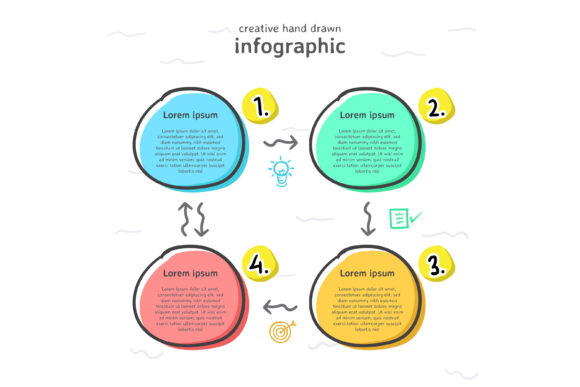
At its core, a hand drawn infographic combines the informational clarity of traditional data visualization with the organic warmth of sketch art. Unlike standard infographics that rely on rigid grids and perfect geometric shapes, hand drawn versions utilize imperfect lines, custom typography, and illustrative elements that mimic pen-on-paper textures. However, it is crucial to distinguish between a simple raster scan of a sketch and a professional hand drawn infographic download that includes vector formats.
True utility lies in the file format. When you acquire a resource that includes a ZIP containing 1x AI file, 1x EPS file (EPS10), and 1x JPG, you are not merely downloading a picture; you are acquiring a flexible design system. The JPG serves as a high-quality preview or a quick-use asset for web layouts, but the AI and EPS files are where the real value resides. These vector formats ensure that every "hand-drawn" line is actually a mathematical path, allowing for infinite scaling without pixelation and complete editability within Adobe Illustrator or compatible software.
Why Authenticity Matters in Modern Communication
The significance of this style extends far beyond aesthetics. In marketing and education, the hand drawn style triggers specific psychological responses. It lowers cognitive barriers and creates a sense of intimacy between the creator and the viewer. When a reader encounters a sketch-style explanation of a complex topic, they often perceive it as a personal note or a tutorial rather than a corporate mandate. This is particularly relevant in modern life where digital fatigue is prevalent.
- Increased Retention: Studies in visual learning suggest that organic, sketch-like visuals can improve memory retention because they require the brain to actively process the information rather than passively consuming polished graphics.
- Brand Differentiation: In crowded markets, a bespoke hand drawn style helps brands stand out against competitors using identical stock templates.
- Emotional Connection: Imperfections in line work signal human involvement, fostering trust and approachability in sensitive or complex subject matters.
- Versatility: These assets bridge the gap between professional presentations and creative storytelling, making them suitable for everything from annual reports to classroom worksheets.
Practical Applications Across Industries
The versatility of a 100 vector fully editable package means these assets are not limited to graphic designers. Educators use them to create engaging lesson plans that break down scientific processes or historical timelines without intimidating students. Business consultants utilize them to map out workflows and organizational structures in a way that feels collaborative rather than hierarchical. Content creators and bloggers employ them to illustrate abstract concepts in articles, increasing time-on-page and social shares.
For example, consider a financial advisor explaining compound interest. A standard bar chart conveys the data accurately but coldly. A hand drawn infographic showing a snowball rolling down a hill, with sketched annotations and arrows, tells a story. It transforms abstract numbers into a tangible narrative. Because the downloaded assets are fully editable vectors, the advisor can change the colors to match their brand, adjust the text to fit specific client demographics, and resize the graphic for both a printed brochure and an Instagram post without losing quality.
Understanding the Technical Advantage of Vector Files
A common misunderstanding among beginners is assuming all downloadable graphics function the same way. Many free resources offer only PNG or JPG formats. While useful for static displays, these raster formats become problematic when you need to customize the content. If you try to enlarge a JPG for a banner, it blurs. If you want to change the color of a specific element in a flattened image, you must resort to complex masking in Photoshop.
This is why the inclusion of EPS10 and AI files is non-negotiable for professional work. EPS10 is a widely compatible vector standard that preserves paths and layers across different versions of design software. The AI file provides native access to anchor points, stroke weights, and layer organization. Being "fully editable" means you can:
- Recolor individual elements to adhere to strict brand guidelines.
- Rearrange components to fit different aspect ratios (e.g., converting a vertical infographic to a horizontal header).
- Add or remove illustrative elements based on the specific needs of your project.
- Scale the artwork to billboard size while maintaining crisp, clean edges.
- Integrate the hand drawn elements with other vector assets seamlessly.
Navigating Common Misconceptions
Despite their popularity, there are assumptions about hand drawn infographics that need clarification. One prevalent myth is that "hand drawn" implies "unprofessional." On the contrary, creating a cohesive hand drawn aesthetic requires significant discipline. The best vector packs maintain consistent stroke widths, balanced compositions, and legible typography despite the organic style. When selecting a hand drawn infographic download, look for consistency in the line weight and shading techniques across all 100 vectors to ensure your final composition looks unified.
Another misconception is that these assets are difficult to edit for non-designers. While familiarity with Adobe Illustrator is beneficial, the learning curve for basic edits (changing text, swapping colors) is relatively low. Furthermore, many modern tools like Affinity Designer or even Canva (with SVG/EPS import capabilities) are opening up vector editing to a broader audience. The key is understanding that you are manipulating objects, not pixels, which actually makes editing more intuitive once the basic concept is grasped.
Maximizing Value from Your Download
To truly benefit from a high-quality vector pack, users should approach the asset as a library of building blocks rather than a finished product. With 100 vector elements at your disposal, the goal is to mix and match. Combine icons, connectors, banners, and character illustrations to build custom layouts that serve your specific narrative. The ZIP structure typically organizes these files logically, but taking the time to rename and categorize assets within your own workflow will save hours in future projects.
Additionally, consider the context of output. While the AI and EPS files are your master copies, always export optimized versions for end-use. For web display, SVG is often superior to JPG as it retains scalability and allows for CSS animation. For print, ensure your document color mode is set to CMYK before exporting from Illustrator to guarantee color accuracy. The high-quality JPG included in the package serves as an excellent reference proof or a fallback for platforms that do not support vector uploads.
Building a Broader Visual Literacy
Ultimately, utilizing hand drawn infographics is about more than just making things look pretty; it is about developing visual literacy. By working with editable vectors, you begin to understand how visual metaphors are constructed. You learn how line direction guides the eye, how whitespace creates breathing room, and how illustration can simplify complexity. This knowledge transfers to all areas of communication, making you a more effective storyteller whether you are designing a slide deck, writing a blog post, or teaching a class.
The intersection of creativity and technology found in these downloadable assets represents the best of modern design resources. They honor the human touch while leveraging the precision of digital tools. By choosing resources that prioritize editability and quality—ensuring you receive those critical AI and EPS files—you invest in a sustainable, adaptable visual language that can grow alongside your personal or professional endeavors. In a world of noise, the thoughtful, hand-crafted line still speaks volumes.